
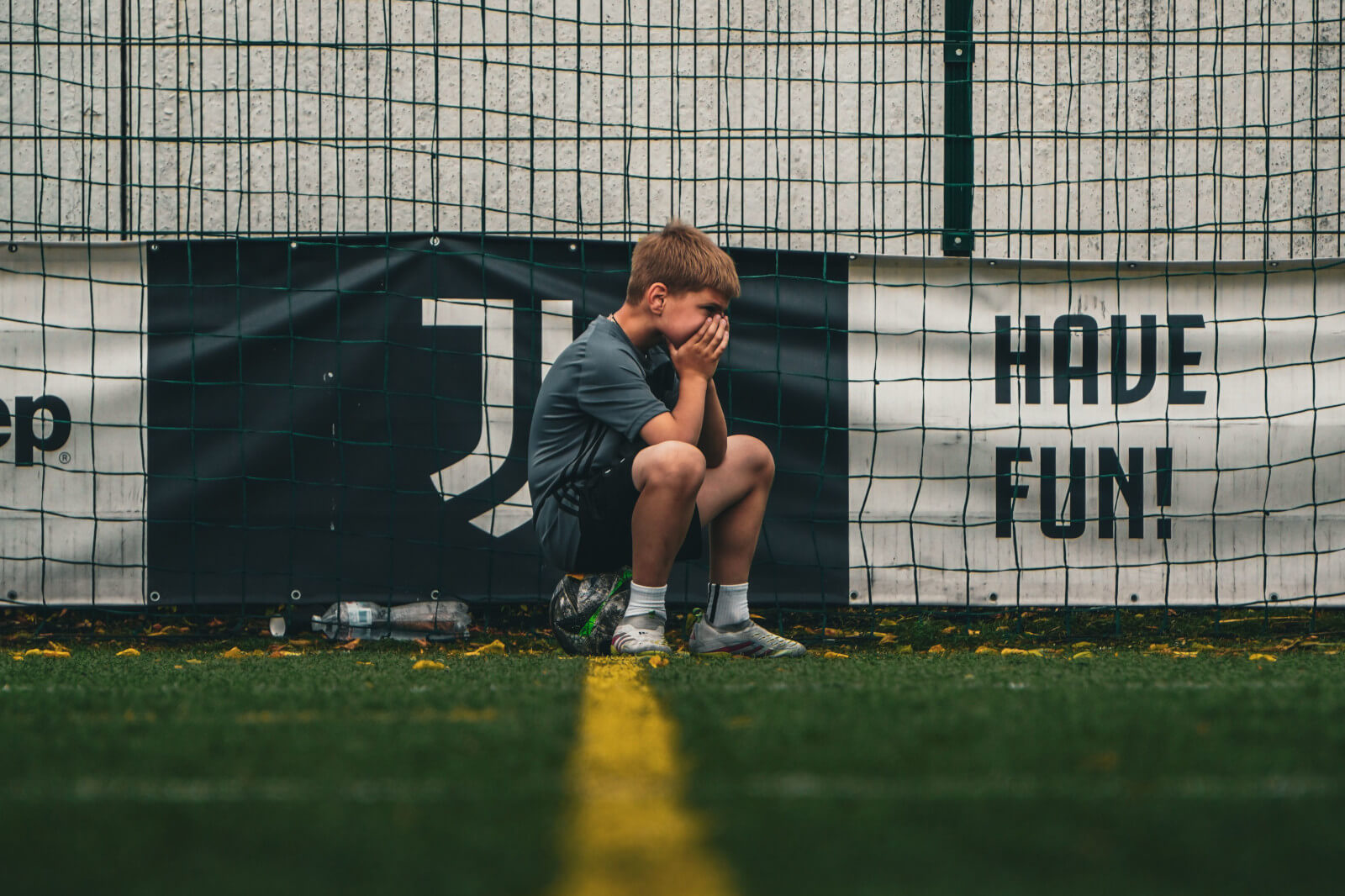
We’re Losing 70% of Young Athletes by Age 13. Here’s the Real Reason Why.
by Dan Greco, Co-Founder, MaxU
Every year, millions of families go all in on youth sports.
They buy the equipment. Rearrange their schedules. Coordinate multiple kids across multiple fields on weeknights and weekend mornings. Hire the coaches for private training, pay the registration fees, and show up game after game, practice after practice because they believe in what sport builds in a child.
They do everything right. And by the time their child turns 13, there is a 70% chance that child will have walked away from sports entirely.
Seventy percent. Not because they lacked ability. Not because the competition was too fierce. Not because they stopped loving it. Because nobody gave them the tools to handle what sports actually demand of them mentally.
I have spent the last several years as a Co-Founder building and scaling MaxU, a science-backed, AI-powered mental performance platform for young athletes and more than a decade before that helping to run a youth sports organization. I have watched thousands of young athletes up close: the ones who stayed and the ones who left. The dividing line is almost never talent. It is almost always something far more preventable.
We Have Built the Wrong Infrastructure
The youth sports industry has done extraordinary work over the last two decades. Coaching certifications have become more rigorous. Facilities have become more sophisticated. Player safety protocols such as background checks, concussion screening, protective equipment have rightly become non-negotiable standards.
But we built the entire infrastructure around the physical experience of sport while leaving the mental experience almost entirely to chance.
Think about what we actually ask of a 9-year-old stepping to the plate for the first time: manage fear, regulate emotion, recover instantly from failure, perform under the scrutiny of parents and teammates and coaches and then do it again on the next pitch regardless of what just happened. That is an extraordinary psychological demand. We give them batting gloves. We give them nothing for what is happening inside their head.
Research confirms that youth sports programs provide a unique and powerful opportunity to embed mental health and wellbeing support at exactly the moment in a young person’s development when it matters most. We are not yet using that opportunity at scale.
What Is Actually Happening at Age 13
The 70% dropout rate does not happen in a single moment. There is no dramatic farewell, no formal decision. It happens quietly in the accumulation of moments that nobody helped a young athlete process.
The strikeout in the final inning. The missed penalty kick with everyone watching. The first time they were cut from a team and did not know what to do with that feeling. The car ride home where a parent’s silence, or worse, their words, settled into something a child could not name but would carry for years.
These are not small moments. They feel enormous to a child who has not yet been given any language for what they are experiencing. And without that language, without the tools to metabolize failure and reset emotionally and try again from a place of belief rather than fear, those moments do not pass. They accumulate. They harden into a story a young athlete begins to tell themselves about who they are and what they are capable of.
That story is almost always wrong. And it is almost always preventable.
Here is what most people do not understand: the mental skills that separate the athletes who stay from the ones who walk away are not innate. They are not personality traits distributed unevenly at birth, the lucky ones resilient, the rest fragile. Composure under pressure, the ability to recover from failure, the emotional reset between a bad play and the next one these are trainable skills, as learnable as a crossover dribble or a proper throwing motion. We simply never decided to teach them.
The window to do that is childhood. And besides formal education, no institution reaches more young people during those formative years consistently, repeatedly, across every background and zip code than organized sport.
We are with them every single week. We are just not using it.
The Standard Is Shifting
Something important is beginning to change. The CEO of Players Health, the nation’s leading youth sports safety platform serving more than 5.5 million athletes, recently declared publicly that mental performance belongs in the same category as a helmet or a background check. USA Archery became the first National Governing Body in the United States to formally offer mental performance infrastructure across their entire membership. The State of California committed $4 million to building a centralized youth sports access system with mental health and wellness as a foundational pillar.
These are not isolated decisions. They are signals. The organizations that are moving now, the governing bodies, the leagues, the clubs, the state associations are the ones that will define what complete athlete development looks like for the next decade. The ones that wait will eventually be asked to meet a standard they did not help set.
What We Owe Every Young Athlete
We would never send a child onto a field unprepared for the physical demands of what they are about to face. We are long overdue in applying the same logic to mental preparation. The mental demands are just as real and the consequences of ignoring them are just as lasting.
The 70% who leave youth sports by age 13 are not failures. They are the entirely predictable outcome of a system that never fully reckoned with what it was asking of them. We built the physical infrastructure. We left the mental infrastructure to chance. And a generation of young athletes paid the price not just in the sports they left behind, but in the confidence, resilience, and belief in themselves they never got the chance to build.
Here is what makes this moment different from every moment before it: the skills we are talking about are not sports skills. Composure under pressure. Recovery from failure. The ability to reset, refocus, and compete with belief rather than fear. These are life skills, the exact qualities that determine how a young person navigates a difficult conversation, a career setback, a relationship challenge, a moment where everything they have prepared for is suddenly on the line.
Youth sport is not just the perfect place to build these skills. For most children, it may be the only place with the frequency, the stakes, and the emotional intensity required to make the training real. And, that window does not stay open forever.
Talent was never the problem.
The infrastructure was.
And unlike talent, infrastructure is something we can build.
Get Started with the MaxU Platform Today!